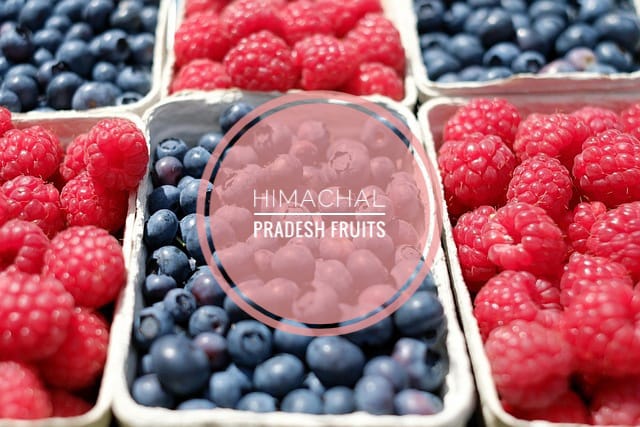
Himachal Pradesh fruits are not just beautiful to look at; they are a delight to grow and eat, whether in orchards or home gardens. From apple-laden hills to wild forest berries, the state offers a wide variety that gardeners and small-scale farmers can explore.
Understanding these fruits helps you plan cultivation, identify seasonal produce, and even enjoy value-added products. Let’s explore the cultivated fruits first, then move to the wild treasures of Himachal.
For gardeners or small-scale farmers, understanding these fruits helps in growing or identifying them in their backyard or fields. Let’s explore the cultivated fruits first, then move to the wild treasures of Himachal.
Cultivated Fruits of Himachal Pradesh
| Fruit | Main Growing Areas | Season |
|---|---|---|
| Apple | Shimla, Kullu, Kinnaur | July–October |
| Apricot | Kinnaur, Lahaul-Spiti | May–July |
| Peach | Solan, Sirmaur | May–July |
| Plum | Solan, Mandi | June–August |
| Pear | Kullu, Shimla | July–September |
| Cherry | Kullu, Shimla | May–June |
| Kiwi | Solan, Mandi | November–February |
| Strawberry | Solan, Palampur | February–April |
1. Apple
Apples are Himachal’s most famous fruit and thrive in Shimla, Kinnaur, and Kullu. Varieties like Royal Delicious, Red Chief, and Golden Delicious are widely grown. Apples are harvested between July and October and form the backbone of local horticulture.
| Attribute | Details |
|---|---|
| Scientific Name | Malus domestica |
| Family | Rosaceae |
| Season | July–October |
| Main Growing Areas | Shimla, Kullu, Kinnaur |
| Uses/Benefits | Eaten fresh, juices, jams, rich in vitamin C |
2. Apricot (Khubani)
Apricots prefer cold desert areas like Kinnaur and Lahaul-Spiti. The sweet and slightly tangy fruit is used fresh or to make jams and apricot oil.
| Attribute | Details |
|---|---|
| Scientific Name | Prunus armeniaca |
| Family | Rosaceae |
| Season | May–July |
| Main Growing Areas | Kinnaur, Lahaul-Spiti |
| Uses/Benefits | Fresh eating, jams, apricot oil, rich in vitamins A and C |
3. Peach (Aadu)
Peaches grow well in Solan and Sirmaur. Their soft, juicy flesh is perfect for desserts and preserves. Harvest is usually in June–July.
| Attribute | Details |
|---|---|
| Scientific Name | Prunus persica |
| Family | Rosaceae |
| Season | May–July |
| Main Growing Areas | Solan, Sirmaur |
| Uses/Benefits | Eaten fresh, desserts, preserves, vitamin-rich |
4. Plum (Aloo Bukhara)
Plums are small, tart, and grow easily in mid-hills like Solan and Mandi. They are used in jams, juices, and eaten fresh.
| Attribute | Details |
|---|---|
| Scientific Name | Prunus domestica |
| Family | Rosaceae |
| Season | June–August |
| Main Growing Areas | Solan, Mandi |
| Uses/Benefits | Fresh eating, jams, juices, antioxidants-rich |
5. Pear (Nashpati)
Pears are crisp and mildly sweet. They grow alongside apples and are harvested between July and September.
| Attribute | Details |
|---|---|
| Scientific Name | Pyrus communis |
| Family | Rosaceae |
| Season | July–September |
| Main Growing Areas | Kullu, Shimla |
| Uses/Benefits | Fresh eating, jams, high in fiber and vitamin C |
6. Cherry
Cherries are small, shiny, and sweet. Mainly grown in Kullu and Shimla, they have a short fruiting season but fetch high market prices.
| Attribute | Details |
|---|---|
| Scientific Name | Prunus avium |
| Family | Rosaceae |
| Season | May–June |
| Main Growing Areas | Kullu, Shimla |
| Uses/Benefits | Eaten fresh, desserts, preserves, rich in antioxidants |
7. Kiwi
Kiwi is a newer introduction in Himachal, thriving in Solan and Mandi. The fruit is rich in vitamin C and increasingly popular for cultivation.
| Attribute | Details |
|---|---|
| Scientific Name | Actinidia deliciosa |
| Family | Actinidiaceae |
| Season | November–February |
| Main Growing Areas | Solan, Mandi |
| Uses/Benefits | Eaten fresh, juices, vitamin C-rich, promotes immunity |
8. Strawberry
Strawberries grow in cooler valleys like Palampur and Solan. They are delicate, sweet, and perfect for jams, juices, and fresh consumption.
| Attribute | Details |
|---|---|
| Scientific Name | Fragaria × ananassa |
| Family | Rosaceae |
| Season | February–April |
| Main Growing Areas | Solan, Palampur |
| Uses/Benefits | Fresh eating, jams, desserts, antioxidants-rich |
9. Persimmon (Diospyros kaki)
Persimmons are gradually gaining popularity in Solan. The fruit is sweet when ripe and has a smooth texture, ideal for fresh eating or drying.
| Attribute | Details |
|---|---|
| Scientific Name | Diospyros kaki |
| Family | Ebenaceae |
| Season | October–November |
| Main Growing Areas | Solan |
| Uses/Benefits | Fresh eating, dried fruit, high in vitamins A and C |
Wild Fruits of Himachal Pradesh
| Wild Fruit | Habitat / Growing Region | Use / Characteristic |
|---|---|---|
| Kafal | Mid-hill pine forests | Sweet-tart berries eaten fresh |
| Hisalu | Hill slopes and trails | Wild raspberry, juicy and tangy |
| Wild Ber | Dry lower hills | Chewy, vitamin-rich fruit |
| Kachnar | Lower hill forests | Edible buds used in curries |
| Chilgoza | Kinnaur and cold deserts | Edible pine nut, high value |
| Timru | Mid and low hills | Spicy fruit used as condiment |
1. Kafal (Myrica esculenta)
Kafal grows naturally in pine forests at mid-hill altitudes. The small red berries are sweet-tart and widely enjoyed fresh by locals.
| Attribute | Details |
|---|---|
| Scientific Name | Myrica esculenta |
| Family | Myricaceae |
| Season | May |
| Main Growing Areas | Mid-hill pine forests |
| Uses/Benefits | Eaten fresh, vitamin C-rich, preserves, local markets |
2. Hisalu (Rubus ellipticus)
The Himalayan raspberry grows along trails and slopes. Its bright yellow or orange fruits are sweet, tangy, and high in antioxidants.
| Attribute | Details |
|---|---|
| Scientific Name | Rubus ellipticus |
| Family | Rosaceae |
| Season | May–June |
| Main Growing Areas | Hill slopes, forest edges |
| Uses/Benefits | Eaten fresh, jams, antioxidant-rich |
3. Wild Ber (Ziziphus species)
Wild ber grows on dry slopes and is smaller and more acidic than cultivated ber. It’s rich in vitamin C and eaten as a snack.
| Attribute | Details |
|---|---|
| Scientific Name | Ziziphus nummularia / Ziziphus mauritiana |
| Family | Rhamnaceae |
| Season | May–June |
| Main Growing Areas | Dry slopes of lower hills |
| Uses/Benefits | Eaten fresh, preserves, vitamin C-rich |
4. Kachnar (Bauhinia variegata)
Kachnar’s buds and pods are edible. Locals use them as a vegetable in curries and also for medicinal purposes.
| Attribute | Details |
|---|---|
| Scientific Name | Bauhinia variegata |
| Family | Fabaceae |
| Season | February–April (buds) |
| Main Growing Areas | Lower hill forests |
| Uses/Benefits | Vegetable curries, medicinal uses, nutritional value |
5. Chilgoza (Pinus gerardiana)
Chilgoza is a pine nut that grows in dry, cold forests. It’s a high-value nut used in sweets and cooking.
| Attribute | Details |
|---|---|
| Scientific Name | Pinus gerardiana |
| Family | Pinaceae |
| Season | September–October |
| Main Growing Areas | Kinnaur, cold deserts |
| Uses/Benefits | Dry fruit, cooking, rich in healthy fats |
6. Timru (Zanthoxylum armatum)
Timru produces small, peppery fruits. It’s used as a spice and in traditional medicine for dental and digestive issues.
| Attribute | Details |
|---|---|
| Scientific Name | Zanthoxylum armatum |
| Family | Rutaceae |
| Season | May–June |
| Main Growing Areas | Mid and low hill forests |
| Uses/Benefits | Spice, medicinal uses, peppery flavor |
Conclusion
Himachal Pradesh offers a rich palette of fruits — from cultivated treasures like apples, strawberries, and peaches to wild delights such as kafal, hisalu, and timru.
Understanding their seasons, growing areas, and uses can help gardeners, small farmers, or fruit enthusiasts plan cultivation, enjoy local produce, or even explore value-added products.
Thanks for reading. Keep growing, keep exploring, and don’t forget to return here at gardeningbud.com for more plants, tips and gardening wisdom.