
Are you curious about the different palm tree varieties in India that can add beauty and value to your garden? You’ve probably seen palms along roadsides, in parks, or near temples, and wondered which ones are suitable for home gardens.
If you’re here, you likely want to know which types thrive in India, how to grow them, and what benefits they bring. This blog is your complete guide.
INTRODUCTION
Palm trees are among the most versatile plants you can grow. Their tall, graceful trunks and fan-like leaves make them iconic in tropical landscapes. In India, palms are admired for both ornamental and practical uses.
Here’s a quick description table to give you an overview:
| Feature | Description |
|---|---|
| Common Name | Palm Tree |
| Botanical Name | Arecaceae family |
| Origin | Tropical and subtropical regions |
| Lifespan | Many species live 50–100 years |
| Plant Height | Varies from 1 m to over 30 m |
| Leaf Type | Fan-shaped or feather-shaped |
| Blooming Season | Year-round (varies by species) |
| Popular Uses | Ornamental, food, timber, religious |
| Sunlight Needs | Full sun to partial shade |
| Soil Requirement | Well-drained, sandy or loamy soil |
HISTORY / ORIGIN
Palms are ancient plants with fossil records dating back more than 80 million years. The family name, Arecaceae, comes from the Greek word areca, meaning palm.
In India, palm trees have long cultural and practical significance. They appear in scriptures, folk tales and traditional medicine. The coconut palm, often called Kalpavriksha (the tree of life), is deeply revered in Hindu culture.
From temple courtyards to palace gardens, palms have been symbols of prosperity and endurance. Their presence in tropical and subtropical climates has made them integral to daily life in India.
GROWING CONDITIONS
Palm trees are generally hardy but do best when grown in the right environment.
Soil
They prefer sandy or loamy soil that drains well. Heavy clay soils should be amended with compost and sand.
Water
Most palms need moderate watering. Overwatering leads to root rot, while drought can dry leaf tips.
Sunlight
Palms enjoy plenty of sunlight. At least six hours of direct light daily ensures healthy growth.
Temperature
They thrive in warm climates. Ideal temperatures range between 20–35°C, although some hardy species tolerate cooler conditions.
PALM TREE VARIETIES IN INDIA
India is blessed with a wide range of palm trees. Some are native, while others were introduced for their ornamental or commercial value. Let’s explore the most popular types.
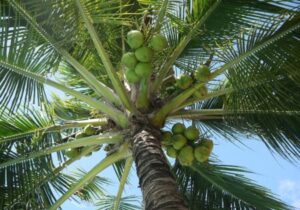
Coconut Palm (Cocos nucifera)
The coconut palm is the most iconic palm tree in India. It is a source of food, oil, fiber, and is deeply linked with coastal traditions and rituals.
- Native place: Coastal India
- Fruit name: Coconut
- Climate type: Hot and humid coastal regions
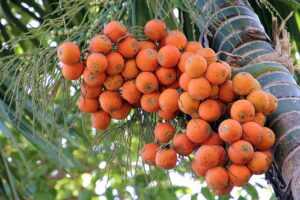
Areca Palm (Areca catechu)
Areca palm is mainly grown for its nuts, commonly called betel nuts. It is also popular as an ornamental plant in modern indoor gardening and landscaping projects.
- Native place: South and Northeast India
- Fruit name: Betel nut
- Climate type: Warm and humid
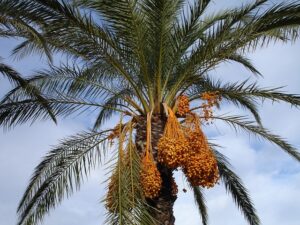
Date Palm (Phoenix dactylifera)
Date palms are grown in dry regions of Rajasthan and Gujarat. They produce edible dates, though Indian yields are less compared to Middle Eastern countries.
- Native place: Introduced to India
- Fruit name: Date
- Climate type: Hot and arid
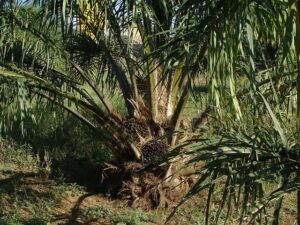
Oil Palm (Elaeis guineensis)
The oil palm was introduced in India for commercial cultivation. Its fruits are used for palm oil production. It grows well in humid southern states like Kerala and Andhra Pradesh.
- Native place: Africa (introduced in India)
- Fruit name: Palm oil fruit
- Climate type: Humid tropical
Foxtail Palm (Wodyetia bifurcata)
The foxtail palm is valued for its feathery fronds and attractive appearance. It is a favorite in urban landscaping and is widely planted along avenues and gardens.
- Native place: Australia (introduced)
- Fruit name: Small red-orange fruits
- Climate type: Tropical and subtropical
Sago Palm (Cycas revoluta)
Although not a true palm, the sago palm is often included for its palm-like appearance. It grows slowly and is widely used as an ornamental plant.
- Native place: Japan and Southeast Asia
- Fruit name: Sago seeds (not edible raw)
- Climate type: Warm and well-drained areas
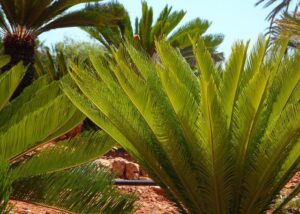
Royal Palm (Roystonea regia)
The royal palm stands tall and elegant with a smooth grey trunk and lush crown. It is often planted along roadsides and in public gardens for its majestic look.
- Native place: Caribbean (introduced in India)
- Fruit name: Small black fruits
- Climate type: Tropical and subtropical

Fan Palm (Livistona chinensis)
Fan palms are admired for their large, fan-shaped leaves. They are commonly planted in gardens and courtyards, adding a striking architectural element to landscapes.
- Native place: China and Southeast Asia
- Fruit name: Small black berries
- Climate type: Tropical and subtropical
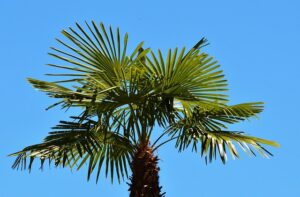
Bismarck Palm (Bismarckia nobilis)
This palm is known for its silver-blue fronds that stand out in gardens. It is drought-tolerant and highly decorative, making it a favorite among landscapers.
- Native place: Madagascar
- Fruit name: Small dark seeds
- Climate type: Dry and warm regions

Talipot Palm (Corypha umbraculifera)
The talipot palm is famous for its enormous flowering structure, the largest in the plant kingdom. It is found in southern India and holds cultural importance in rituals.
- Native place: Southern India and Sri Lanka
- Fruit name: Small round fruits
- Climate type: Tropical and humid
CARE TIPS
Caring for palms, if you have sago palms and other miniatures,is simple but requires consistency.
Pruning
Remove dried or yellow leaves regularly. Avoid cutting green fronds, as they provide food for the plant.
Repotting
Indoor palms need re-potting every 2–3 years. Always use a pot with proper drainage holes.
Fertilizing
Feed palms with slow-release fertilizer high in potassium and magnesium. Fertilize during the growing season.
Propagation
Most palms are grown from seeds. Some species like Areca can be propagated by suckers.
Mulching
Mulch around the base to retain moisture and keep roots cool. Avoid piling mulch against the trunk.
COMMON PROBLEMS AND SOLUTIONS
Palms are resilient but face certain issues.
Yellowing Leaves
Usually a sign of nutrient deficiency. Apply balanced palm fertilizer.
Root Rot
Caused by excess water. Improve drainage and reduce watering.
Pest Attacks
Mealybugs, scale insects, and spider mites affect palms. Use neem oil sprays regularly.
Leaf Spot Disease
Fungal infections cause brown patches. Apply organic fungicides and prune affected leaves.
Slow Growth
May be due to poor soil, lack of sunlight, or insufficient fertilizer. Correct conditions for healthy growth.
USES AND BENEFITS
Palms are versatile and beneficial in many ways.
Ornamental Value
Enhance landscapes, parks, and gardens with their tropical look. Indoor palms add elegance to homes.
Economic Importance
Coconut, date, and oil palms provide food, oil, timber, and raw materials for industries.
Medicinal Uses
Areca nuts, coconut oil, and palm extracts have traditional medicinal applications in Ayurveda.
Environmental Benefits
Palms improve air quality, provide shade, and help reduce heat in urban spaces.
Cultural Significance
Used in religious rituals, festivals, and traditional ceremonies across India.
INTERESTING FACTS
- The Talipot palm blooms only once in its lifetime, after 30–80 years.
- Some palm species can live for more than 100 years.
- The coconut palm is called the “tree of life” due to its multiple uses.
- Bismarck palms are native to Madagascar but grow well in Indian climates.
- Palm leaves have been used for centuries as writing material in manuscripts.
FAQs
Frequently Asked Questions about Palm Tree Varieties in India
1. Which palm tree grows best in Indian home gardens?
The Areca palm and Foxtail palm are popular choices for Indian homes. They adapt well to containers and require moderate care.
2. Do palm trees need a lot of water in India?
Not all palms need heavy watering. While coconut palms like regular moisture, ornamental palms prefer moderate watering in well-drained soil.
3. Can palm trees grow indoors in India?
Yes, species like Areca, Fan, and Sago palms grow well indoors. They need bright light, occasional pruning, and regular watering.
4. How long do palm trees take to grow in India?
Growth rate depends on species. Areca palms grow relatively fast, while Royal and Talipot palms may take years to mature.
5. Are palm trees good for the environment in cities?
Yes, palms provide shade, reduce air pollution, and act as natural coolants. They also add beauty to urban landscapes and gardens.
CONCLUSION
Palm trees are more than just tropical icons. With many palm tree varieties in India, gardeners have endless options for beauty, utility, and cultural value. From majestic Royal palms to the useful coconut palm, each variety offers something unique.
If you’re looking to enhance your garden with a touch of elegance and practicality, palms are an excellent choice. Their versatility and low-maintenance nature make them ideal for Indian climates.
Thanks for reading. Keep growing, keep exploring, and don’t forget to return here at gardeningbud.com for more plants, tips and gardening wisdom.