Have you ever paused under a purple flowering tree and felt your mood instantly lift? These blooms have something magical about them.
Unlike common pink or yellow flowers, purple blossoms carry a rare charm that adds calm and beauty to any garden or any place like roads and parks. They turn a regular corner into a vibrant retreat, alive with color and peace.
If you’ve ever wanted to plant something truly eye-catching, this list of purple flowering trees in India is your perfect starting point.
INTRODUCTION
Purple flowering trees are nature’s way of painting calm over chaos. They add elegance to streets, gardens, and courtyards across India. From the famous Jacaranda of Bengaluru to the graceful Lagerstroemia of Delhi, these trees are admired by gardeners and nature lovers alike.
Below, we’ll explore ten unique trees that bloom in shades of purple — each one distinct in size, care needs, and beauty.
1. JACARANDA TREE
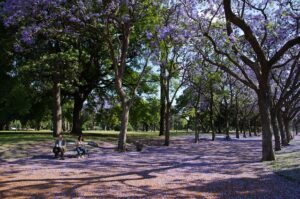
One of the most loved purple flowering trees in India, the Jacaranda is admired for its soft, cloud-like blooms. When in full flower, it carpets the ground with purple petals.
Did You Know? The fallen flowers create a natural purple carpet, which locals in Bengaluru call the “purple rain.” Its wood is sometimes used for musical instruments due to its light texture.
| Feature | Details |
|---|---|
| Common Names | Jacaranda, Blue Jacaranda |
| Native Region | South America (Brazil, Argentina) |
| Bloom Time | March to May |
| Height | 10–15 meters |
| Climate | Warm and subtropical |
2. QUEEN’S CRAPE MYRTLE
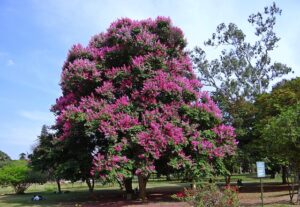
Known as Pride of India, this tree bursts with clusters of deep purple flowers in summer. Its smooth bark and showy blooms make it ideal for city landscapes.
Did You Know? Its leaves are used in traditional medicine for managing blood sugar. The tree is also the state flower of Maharashtra.
| Feature | Details |
|---|---|
| Common Names | Queen’s Flower, Pride of India |
| Native Region | Southeast Asia |
| Bloom Time | April to June |
| Height | 8–12 meters |
| Climate | Tropical and humid |
3. PURPLE ORCHID TREE
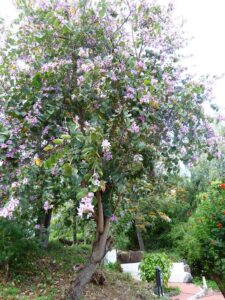
This medium-sized tree is easy to recognize by its butterfly-shaped leaves and orchid-like purple blooms. It flowers nearly year-round in warm areas.
Did You Know? Its unique twin-lobed leaves resemble a camel’s hoof, earning it the nickname “Camel’s Foot Tree.” It is also named after the botanist brothers Jean and Gaspard Bauhin.
| Feature | Details |
|---|---|
| Common Names | Butterfly Tree, Purple Bauhinia |
| Native Region | Southeast Asia |
| Bloom Time | August to November |
| Height | 5–10 meters |
| Climate | Tropical to semi-tropical |
4. ROYAL POINCIANA PURPLE VARIANT
A rare variant of the famous Gulmohar, this tree offers a purple-red twist on the fiery orange blooms. It’s an instant centerpiece in any garden.
Did You Know? Its long woody seed pods are sometimes used as natural rattles or craft materials. The roots help control soil erosion.
Table: Purple Poinciana Details
| Feature | Details |
|---|---|
| Common Names | Purple Gulmohar, Royal Poinciana Purple |
| Native Region | Madagascar |
| Bloom Time | May to July |
| Height | 8–12 meters |
| Climate | Hot and dry to tropical |
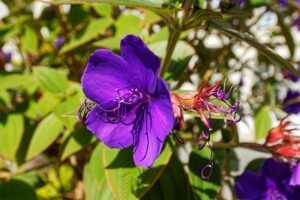
5. TIBOUCHINA TREE
Often called the Princess Flower Tree, Tibouchina dazzles with velvety purple petals and lush green foliage. It prefers moist soil and partial sunlight.
Did You Know? Its velvety leaves slightly change color depending on sunlight intensity. In Brazil, it’s known as the “Glory Tree” because it blooms almost continuously.
| Feature | Details |
|---|---|
| Common Names | Princess Flower, Glory Bush |
| Native Region | Brazil |
| Bloom Time | June to September |
| Height | 2–5 meters |
| Climate | Warm and humid |
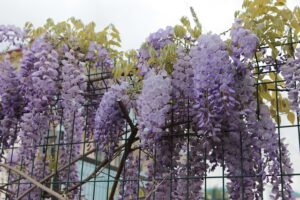
6. PURPLE WISTERIA TREE
Though technically a vine, Wisteria can be trained into a small tree. Its long hanging clusters of lilac-purple flowers bring old-world charm.
Did You Know? Wisteria can live over 100 years. Its flowers are mildly fragrant and symbolize long life and devotion in Chinese culture.
| Feature | Details |
|---|---|
| Common Names | Chinese Wisteria |
| Native Region | China |
| Bloom Time | February to April |
| Height | 3–9 meters (trained form) |
| Climate | Mild to cool subtropical |
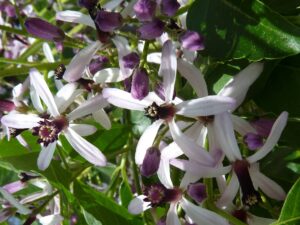
7. INDIAN LILAC / CHINABERRY
This fast-growing deciduous tree produces clusters of tiny lavender-purple flowers. The blossoms are fragrant and attract bees.
Did You Know? Its berries were once used to make rosary beads, giving it the name “Bead Tree.” However, the fruit is mildly toxic if eaten.
| Feature | Details |
|---|---|
| Common Names | Persian Lilac, Bead Tree |
| Native Region | South Asia |
| Bloom Time | March to May |
| Height | 8–15 meters |
| Climate | Subtropical and dry regions |
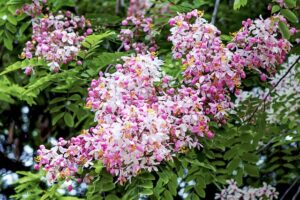
8. PURPLE CASSIA
This rare variety of the Pink Shower Tree has a purplish tone to its flower clusters. It looks stunning when planted near walkways or lawns.
Did You Know? Cassia species are valued in Ayurveda for medicinal bark and pods. The tree also attracts honeybees and sunbirds.
| Feature | Details |
|---|---|
| Common Names | Purplish Pink Shower Tree |
| Native Region | Tropical America |
| Bloom Time | March to June |
| Height | 10–12 meters |
| Climate | Warm and sunny |
9. GLORY TREE
A tropical beauty with deep violet blooms, this tree thrives in coastal and southern India. Its flowers are long-lasting and loved by pollinators.
Did You Know? Its leaves are slightly sticky, trapping small insects (though not for digestion). It’s popular in southern India’s resort landscaping.
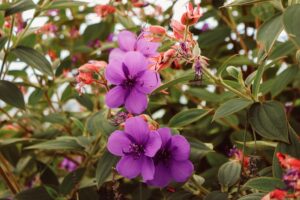
| Feature | Details |
|---|---|
| Common Names | Glory Bush, Purple Glory Tree |
| Native Region | Brazil |
| Bloom Time | April to September |
| Height | 6–8 meters |
| Climate | Warm and coastal regions |
10. CEYLON IRONWOOD
Normally white-flowering, this ornamental variant is cultivated for its light purple blossoms. A slow grower, but stunning once mature.
Did You Know? Its wood was used for temple pillars and traditional oil mills. In Buddhist tradition, Buddha was born under this tree.
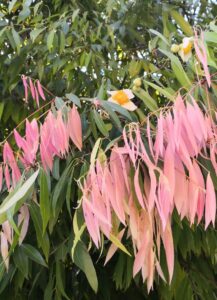
| Feature | Details |
|---|---|
| Common Names | Nagkesar, Ironwood Tree |
| Native Region | Sri Lanka and India |
| Bloom Time | March to May |
| Height | 10–15 meters |
| Climate | Tropical and moist regions |
11.Petrea volubilis
A woody vine trained on arches or trellises. Its star-shaped purple flowers appear in long clusters.
Did You Know? Even after the petals fall, the calyx stays purple for weeks, extending the visual bloom.
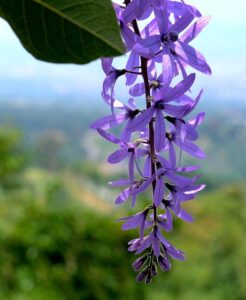
| Feature | Details |
|---|---|
| Common Names | Queen’s Wreath, Sandpaper Vine |
| Native Region | Central America |
| Bloom Time | April to August |
| Height | 3–6 meters (trained) |
| Climate | Warm tropical |
12.Tabebuia avellanedae
Native to South America, it produces lilac-purple trumpet-shaped flowers in spring.
Did You Know? Its bark is used in herbal teas for immune-boosting benefits.It is the national tree of Paraguay.
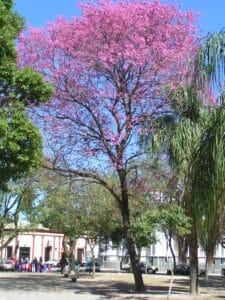
| Feature | Details |
|---|---|
| Common Names | Purple Trumpet Tree |
| Native Region | South America |
| Bloom Time | February to April |
| Height | 6–12 meters |
| Climate | Dry, sunny tropical regions |
FAQs
1. Which purple flowering tree grows fastest in India?
Bauhinia purpurea is among the fastest-growing and blooms within 2–3 years.
2. Can Jacaranda grow in North India?
Yes, if protected from frost. Prefers warm, frost-free regions for lush flowering.
3. Do these trees need full sunlight?
Most need 6+ hours daily, though Tibouchina and Wisteria tolerate partial shade.
4. Are purple flowering trees suitable for small gardens?
Yes. Tibouchina urvilleana and Bauhinia purpurea remain compact and bloom year-round.
5. What soil type is best for these trees?
Loamy, well-drained soil enriched with compost is ideal. Avoid waterlogged areas.
6. Do they attract birds or insects?
Yes. These trees attract pollinators like bees, butterflies, and small birds, enhancing biodiversity.
7. Which tree has the deepest purple color?
Jacaranda mimosifolia and Tibouchina granulosa produce the richest, deepest purple blooms.
CONCLUSION
Purple flowering trees bring elegance and tranquility wherever they grow. From Jacaranda-lined streets to Bauhinia in your courtyard, each tree adds unique charm. Even small gardens can benefit from a touch of purple.
Thanks for reading. Keep growing, keep exploring, and don’t forget to return here at gardeningbud.com for more plants, tips and gardening wisdom.