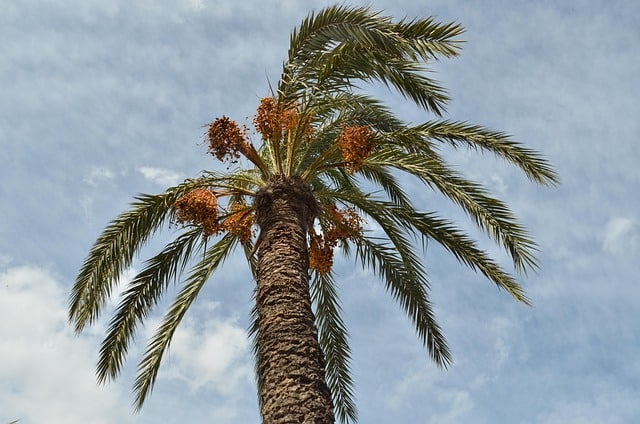
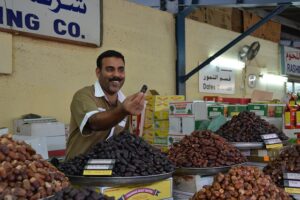
Before we dive in, let me ask you this: have you ever wondered why dates, or khajoor, are found in every corner of the world, from traditional Middle Eastern markets to modern health stores? With so many types of khajoor like Medjool, Ajwa, Deglet Noor, and Barhi, it’s no surprise they’ve become a global favorite—each variety bringing its own taste, texture, and nutrition.
These small, sweet fruits have traveled across centuries, religions, and cultures, yet each type has its own unique flavor and story. If you’ve come here looking to learn about the types of khajoor, their history, and even how to grow them, you’re in the right place.
INTRODUCTION
Khajoor, also called dates, are one of the oldest cultivated fruits in the world. Known for their sweet taste, chewy texture, and rich nutrition, they are treasured in many cultures.
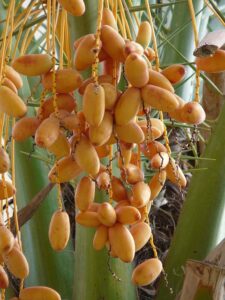
The date palm tree (Phoenix dactylifera) not only produces delicious fruits but also adds beauty to landscapes with its tall, feathery leaves.
To give you a quick glance, here’s a table describing the plant in detail.
| Feature | Description |
| Common Name | Khajoor / Dates |
| Botanical Name | Phoenix dactylifera |
| Plant Family | Arecaceae (Palm family) |
| Type | Perennial, fruit-bearing palm tree |
| Native Region | Middle East and North Africa |
| Average Height | 15–25 meters |
| Lifespan | 100+ years |
| Fruit Type | Drupe (single-seeded sweet fruit) |
| Growing Climate | Hot and dry tropical deserts |
| Uses | Food, medicinal, cultural, ornamental |
HISTORY / ORIGIN
The history of khajoor stretches back over 5,000 years. Archaeological findings in Mesopotamia show that dates were cultivated by ancient civilizations for food and trade.
The word “date” comes from the Greek daktulos, meaning finger, due to its elongated shape. In Arabic, the fruit is called tamr, while in Hindi and Urdu it is widely known as khajoor.
Dates hold deep cultural and religious significance. In Islamic tradition, Prophet Muhammad is said to have broken his fast with dates. They are also mentioned in the Bible and Torah, symbolizing prosperity and fertility.
Trade routes helped spread date palms from the Middle East to Africa, South Asia, and eventually to the Americas. Today, they are grown in more than 30 countries worldwide.
GROWING CONDITIONS
Growing khajoor requires a specific environment. These palms thrive in hot, dry regions where summers are long and winters are mild.
- Soil: Sandy loam with good drainage is ideal. Saline soils can also support growth.
- Water: Requires deep watering, but roots hate waterlogging. Irrigation is crucial in dry climates.
- Sunlight: Needs full sunlight for at least 8 hours daily. Shade reduces fruit production.
- Temperature: Best growth occurs in temperatures between 20°C to 45°C. Tolerates up to 50°C.
- Spacing: Trees need wide spacing, around 7–10 meters apart, to avoid root competition.
TYPES OF KHAJOOR
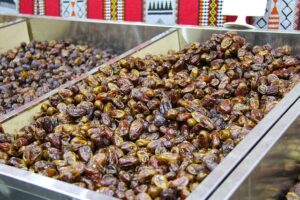
When we think of khajoor, many imagine just a single type of sweet fruit. In reality, there are hundreds of khajoor varieties across the world, each with its own taste, color, and cultural importance.
Learning about the different variety – types of khajoor helps us choose the right ones for eating fresh, storing long-term, or even planting.
Below are some of the most famous types of khajoor described in detail.
Medjool Dates
Known as the “king of dates”, Medjool khajoor are large, juicy, and naturally sweet with a caramel flavor. They are widely enjoyed fresh and are considered a premium variety.
Ajwa Dates
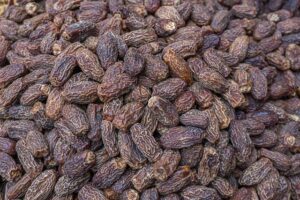
Ajwa khajoor from Medina, Saudi Arabia, are almost black in color and are deeply respected in Islamic tradition. They are mildly sweet, packed with nutrients, and often used for medicinal purposes.
Deglet Noor Dates
Called the “queen of dates”, Deglet Noor khajoor are semi-dry and golden-amber in color. They have a nutty taste and are widely used in cooking and desserts.
Barhi Dates
Barhi khajoor are unique because they are eaten both fresh and ripe. When yellow, they are crunchy like apples. As they ripen, they become soft and syrupy sweet.
Safawi Dates
Safawi khajoor are medium-sized and black in color, cultivated mainly in Saudi Arabia. They are very sweet, rich in minerals, and often given as gifts.
Zahidi Dates
Zahidi khajoor are golden-yellow, semi-dry dates with a nutty flavor. They are less sticky compared to other types, have high fiber content, and store well for long periods.
Khadrawy Dates
Khadrawy khajoor are reddish-brown and soft. They are famous in Iraq and are loved for their melt-in-the-mouth sweetness when eaten fresh.
Amber Dates
Amber khajoor are a premium Saudi Arabian variety. They are large, dark brown, rich in nutrients, and valued for their long shelf life.
Mabroom Dates
Mabroom khajoor are elongated and reddish-brown. They are chewy and less sugary than Medjool, making them a great option for those who prefer mild sweetness.
Halawi Dates
Halawi khajoor are very sweet, as the name suggests (Halawi means “sweet” in Arabic). They are small to medium in size and have a caramel-like flavor.
QUICK COMPARISON TABLE
| Variety | Color | Taste Profile | Main Region |
| Medjool | Dark Brown | Caramel-like sweetness | Morocco, USA |
| Ajwa | Blackish-brown | Mildly sweet, rich | Saudi Arabia |
| Deglet Noor | Amber | Nutty, semi-sweet | Tunisia, Algeria |
| Barhi | Yellow / Golden | Crunchy to syrupy sweet | Iraq |
| Safawi | Black | Very sweet, mineral-rich | Saudi Arabia |
| Zahidi | Golden | Nutty, fiber-rich | Iraq |
| Khadrawy | Reddish-brown | Soft, sweet | Iraq |
| Amber | Dark Brown | Rich and sweet | Saudi Arabia |
| Mabroom | Reddish-brown | Balanced, less sugary | Saudi Arabia |
| Halawi | Light Brown | Caramel-sweet | Middle East |
CARE TIPS
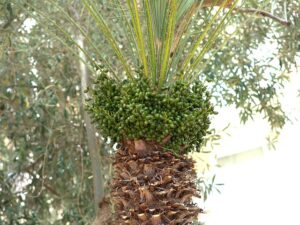
Taking care of a date palm requires patience, as fruiting starts only after 5–7 years. Here are the main care tips:
- Pruning: Remove old fronds regularly to improve airflow and appearance.
- Repotting (for potted palms): Every 2–3 years, shift young palms into larger containers.
- Fertilizing: Apply organic compost and NPK fertilizer during growing season.
- Pollination: Dates require cross-pollination, usually done manually in commercial farms.
- Propagation: Mainly through offshoots or suckers, since seeds take longer to fruit.
- Mulching: Helps retain soil moisture in dry areas.
COMMON PROBLEMS AND SOLUTIONS
Like any plant, date palms face challenges. Here are common issues and fixes:
- Pests: Red palm weevil is a major threat. Regular inspection and biological control help prevent damage.
- Diseases: Fungal infections like black scorch can affect fronds. Use fungicides and remove infected leaves.
- Water Stress: Both overwatering and underwatering reduce fruit yield. Balance irrigation carefully.
- Poor Fruiting: May occur if pollination is incomplete. Hand pollination is recommended.
- Yellowing Leaves: Often due to nutrient deficiency. Apply balanced fertilizers and micronutrients.
USES AND BENEFITS
Khajoor is more than just a sweet snack. It has multiple uses and benefits:
- Nutritional Value: Rich in fiber, iron, potassium, magnesium, and natural sugars. Provides quick energy.
- Medicinal Uses: Traditionally used to improve digestion, boost immunity, and relieve fatigue.
- Cultural Uses: Essential in Islamic fasting rituals, Hindu festivals, and Middle Eastern cuisines.
- Environmental Benefits: Provides shade, windbreaks, and stabilizes sandy soils.
- Ornamental Value: Palm trees enhance landscapes, giving a tropical desert charm.
INTERESTING FACTS
Here are five surprising facts about khajoor:
- A single date palm can live for more than 100 years.
- There are over 1,500 varieties of dates grown globally.
- Dates are called “the bread of the desert” for their sustenance value.
- Fossil evidence shows dates existed 50 million years ago.
- The tallest recorded date palm grew over 30 meters.
FAQs1. How long does a khajoor tree take to bear fruit? 2. Can khajoor grow in India? 3. What is the difference between fresh and dried dates? 4. Do date palms need male and female trees? 5. Are khajoor healthy for daily eating? |
CONCLUSION
Khajoor, with its deep history, rich culture, and countless varieties, is truly a treasure among fruit-bearing trees. Growing it requires patience, but the rewards are sweet in every sense.
Whether you enjoy them as a snack, add them to dishes, or admire the graceful palm tree in your garden, khajoor never fails to impress.
Thanks for reading. Keep growing, keep exploring, and don’t forget to return here at gardeningbud.com for more plants, tips and gardening wisdom.