
Have you ever walked through an old neighborhood and noticed a massive tree with heart-shaped leaves swaying gently in the breeze? That is the Peepal tree, known for its countless uses of Peepal in daily life — from purifying air and healing ailments to offering peace and spiritual strength. A majestic presence, it brings shade, calm, and a sense of timelessness to any place it grows
“The Peepal tree is not just a tree, it is a living symbol of life, wisdom, and continuity.”
INTRODUCTION
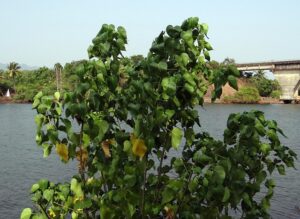
The Peepal tree (Ficus religiosa) is one of India’s most revered trees. It is known for its towering height, broad canopy, and distinctive heart-shaped leaves. Gardeners and nature lovers appreciate it not just for its beauty but also for its environmental and cultural significance.
Peepal trees are evergreen to semi-evergreen, depending on climate. They attract birds, bees and other pollinators and help improve air quality, making them an ideal addition to gardens, parks, or even temple surroundings.
Here’s a quick overview of the Peepal tree:
| Feature | Description |
|---|---|
| Common Name | Peepal, Sacred Fig |
| Scientific Name | Ficus religiosa |
| Family | Moraceae |
| Native Region | India, Nepal, Sri Lanka, Southeast Asia |
| Plant Type | Large perennial tree |
| Height | 20 to 30 meters |
| Leaf Shape | Heart-shaped with pointed tip |
| Flowering Season | Throughout the year, peaks in summer |
| Soil Preference | Well-drained loamy or sandy soil |
| Uses | Ornamental, medicinal, cultural, environmental |
The Peepal tree holds a special place in Indian culture, traditional medicine, and folklore, making it much more than just a shade provider.
HISTORY AND ORIGIN
The Peepal tree is native to India and parts of Southeast Asia. Its Sanskrit name, Ashvattha, has been mentioned in ancient texts like the Vedas and the Bhagavad Gita. Traditionally, it is considered sacred in Hinduism, Buddhism and Jainism.
Buddha is said to have attained enlightenment under a Peepal tree, making it central to Buddhist iconography. In villages, it is common to see villagers offering prayers or tying threads around the tree as part of rituals.
Etymologically, “Ficus” refers to the fig genus, and “religiosa” signifies its sacred status. This tree has stood witness to centuries of culture, festivals, and folklore across the Indian subcontinent.
Its significance is not just spiritual; it has been used in medicine, Ayurveda and traditional remedies for centuries, offering leaves, bark, and figs for various purposes.
GROWING CONDITIONS
Growing a Peepal tree is relatively straightforward if you know its basic needs.
SOIL
It thrives in well-drained loamy or sandy soil. Heavy clay soil may require mixing with sand for proper drainage.
WATER
Young plants require regular watering. Mature trees are drought-tolerant and need only occasional watering.
SUNLIGHT
Full sunlight is essential. Peepal trees need at least 6 to 8 hours of direct sun for healthy growth and abundant foliage.
TEMPERATURE
The ideal range is 25°C to 40°C. The tree tolerates heat well but is sensitive to frost during early years.
LOCATION TIP
Plant in open spaces where roots have room to expand. Avoid planting near buildings as roots can become extensive.
VARIETIES OF PEEPAL TREE
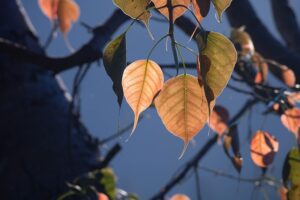
While all Peepal trees belong to Ficus religiosa, there are slight variations in leaf size, growth habit, and fig production.
- COMMON PEEPAL
- Native Place: India and Nepal
- Fruit Name: Small figs
- Climate Type: Tropical and subtropical
- BODHI PEEPAL
- Native Place: India and Sri Lanka
- Fruit Name: Tiny yellow figs
- Climate Type: Tropical
- SILVER PEEPAL
- Native Place: Southeast Asia
- Fruit Name: Small reddish figs
- Climate Type: Tropical and humid
“I remember planting a Peepal sapling near my village during a summer evening. Watching it grow year after year into a tall, leafy giant became a daily meditation for me and reminded me of patience and continuity.”
CARE TIPS
Caring for a Peepal tree is easy once you understand its natural tendencies.
1. PRUNING
Remove dead or weak branches to maintain shape. Pruning also allows sunlight to reach lower branches and promotes better airflow.
2. REPOTTING/TRANSPLANTING
Young trees may need transplanting from nursery pots to the ground. Ensure roots are undisturbed during relocation for best growth.
3. FERTILIZER
Apply compost or organic manure annually. Nitrogen-rich fertilizers encourage foliage growth and flowering.
4. PROPAGATION
Peepal can be propagated from seeds or cuttings. Soak seeds overnight in warm water before sowing for better germination.
5. MULCHING
Add a layer of mulch around the base to retain moisture and reduce weed growth. Avoid piling mulch directly against the trunk.
PROBLEMS AND SOLUTIONS
Even hardy trees face occasional challenges.
1. ROOT ROT
- Problem: Caused by waterlogging
- Solution: Improve drainage and avoid overwatering
2. PESTS
- Problem: Caterpillars and aphids may damage leaves
- Solution: Spray neem oil or mild insecticidal soap
3. YELLOW LEAF
- Problem: Nutrient deficiency
- Solution: Apply organic compost and check soil pH
4. FUNGAL INFECTION
- Problem: Black spots or powdery mildew
- Solution: Remove infected leaves and spray fungicide if needed
5. POOR GROWTH
- Problem: Caused by insufficient sunlight or overcrowding
- Solution: Ensure full sun and adequate spacing
USES AND BENEFITS OF PEEPAL TREE
The Peepal tree is not just an ornamental or sacred plant. It offers numerous benefits for health, environment, and cultural practices. From traditional medicine to oxygen production, it serves multiple purposes for humans and wildlife alike.
1. MEDICINAL USES
The leaves, bark, and figs of Peepal are used in Ayurveda for respiratory problems, diabetes, and digestive health. Regular use in herbal remedies supports overall wellness naturally.
- Leaves help in reducing asthma symptoms and respiratory issues.
- Bark is used to regulate blood sugar levels in traditional remedies.
- Figs aid digestion and provide essential nutrients for daily health.
2. ENVIRONMENTAL BENEFITS
Peepal trees are excellent for urban and rural environments. They produce oxygen continuously, support pollinators, prevent soil erosion, and contribute to biodiversity.
- Provides habitat and food for birds, bees and small animals.
- Extensive roots prevent soil erosion and stabilize landscapes.
- Large canopy offers shade, reduces heat, and improves air quality.
3. ORNAMENTAL & GARDEN VALUE
With its towering height, broad canopy, and heart-shaped leaves, the Peepal tree adds beauty and structure to gardens, parks, and courtyards. It also complements landscape designs naturally.
- Large evergreen canopy provides visual focal points in gardens.
- Attracts pollinators enhancing the ecosystem of any green space.
- Thrives with minimal maintenance, making it ideal for low-effort landscaping.
4. CULTURAL & SPIRITUAL SIGNIFICANCE
Peepal is revered in Hinduism, Buddhism and Jainism. People offer prayers, tie threads, and meditate under it, believing it brings prosperity, spiritual growth, and peace of mind.
- Central to rituals during festivals like Kartik Purnima and Buddha Jayanti.
- Believed to bring mental clarity and spiritual awakening when meditated under.
- Acts as a living symbol of continuity and sacred tradition.
5. HEALTH & LIFESTYLE
The tree provides natural remedies, herbal teas and wellness benefits. Traditional practices use its leaves, bark and figs for everyday health routines.
- Herbal teas from leaves help detoxify and cool the body.
- Bark extracts are used in traditional skincare and healing pastes.
- Dried figs serve as a nutritious snack and natural supplement.
INTERESTING FACTS
- The Peepal tree can live for over 1,000 years under ideal conditions.
- Its leaves produce oxygen even at night, unlike most plants.
- It is considered sacred in Hinduism, Buddhism and Jainism.
- Ancient temples often have Peepal trees planted nearby.
- Its roots can grow aerially and form secondary trunks supporting the canopy.
FAQs1. Can a Peepal tree be grown indoors? 2. How long does it take to grow a mature Peepal tree? 3. Are Peepal tree leaves edible? 4. How often should a Peepal tree be watered? 5. What is the difference between Peepal and Banyan trees? |
CONCLUSION
The Peepal tree is a remarkable plant that combines beauty, culture, medicine and environmental benefits in one. It teaches patience, resilience and respect for nature.
Whether you grow it for shade, spiritual practice, or simply to enjoy its presence, the Peepal tree enriches any garden or landscape. Nurture it well and it will reward you with decades of beauty, wisdom and ecological support.
Thanks for reading. Keep growing, keep exploring, and don’t forget to return here at gardeningbud.com for more plants, tips and gardening wisdom.