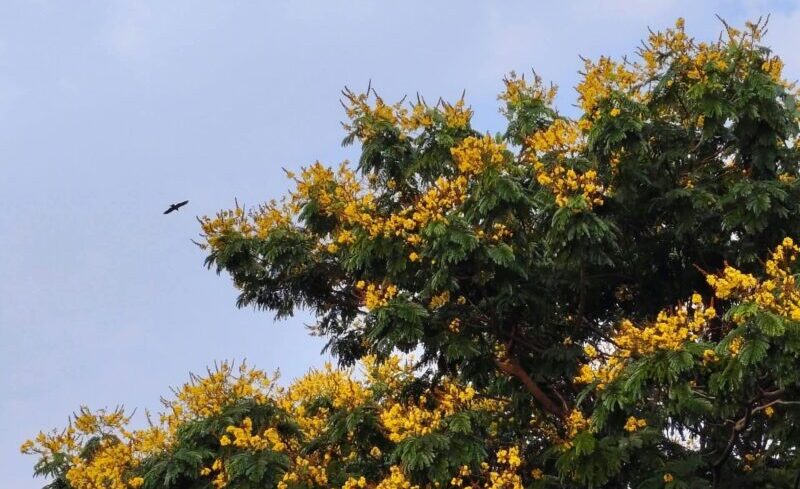
Copper pod tree has been a familiar sight on many warm city roadsides and we often walk past it without noticing its charm. We saw one recently after a sudden summer shower.
The yellow petals were scattered on the pavement like someone had placed a soft carpet for us. That simple moment made us stop and look up at the tree that had been there all along yet never fully appreciated.
INTRODUCTION
We often underestimate how much a single tree can change how a space feels. The copper pod tree brings bright blooms soft shade and a warm personality to any garden or street. Many of us know it by its yellow flowers that fall like confetti. Others know it for the copper colored new leaves that give the tree its popular name.
The copper pod tree is known scientifically as Peltophorum pterocarpum. It grows easily in warm parts of India which makes it ideal for both beginners and seasoned gardeners.
It has a balanced mix of beauty shade and resilience which is why it remains a top choice for landscapers.
Below is a simple description table to help you understand the tree quickly.
| Feature | Description |
|---|---|
| Scientific Name | Peltophorum pterocarpum |
| Common Name | Copper pod tree |
| Family | Fabaceae |
| Native Region | Tropical Southeast Asia |
| Mature Height | 10 to 20 meters |
| Leaf Type | Bipinnate feathery leaves |
| Flower Color | Bright yellow |
| Blooming Season | Summer to monsoon |
| Growth Speed | Fast growing |
| Ideal Climate | Warm humid tropical regions |
“The copper pod tree reminds us that color warmth and shade can exist in a single frame of nature.”
HISTORY AND ORIGIN
The copper pod tree has a long presence across tropical landscapes. It originated in Southeast Asia where it thrived in warm forests with high moisture. Over time people transported it across tropical regions because of its ornamental value and quick growth.
The tree became common in India during the early colonial period when it was introduced for avenue planting. Since then it has blended into the local environment so well that many people assume it is native.
Its cultural significance comes mostly from the shade it provides. In many cities this tree is planted along roadsides school grounds and public gardens. It has become a symbol of comfort during hot summers.
ETYMOLOGY
The name comes from two features. The copper colored young leaves give it the name copper pod. The word pod refers to its long seed pods that hang from the branches. The scientific name Peltophorum means shield bearing which hints at the shape of its seed pods.
IDEAL GROWING CONDITIONS
Growing a copper pod tree is quite simple if we understand what it prefers. It adapts quickly and responds well to warm climates.
SOIL
We can grow it in well drained soil with moderate fertility. It does not need rich soil. Sandy loam or garden soil with compost works well. Avoid waterlogged areas because the roots do not enjoy standing water.
WATER
Young saplings need regular watering to establish. Mature trees survive long dry spells. We can water once a week during hot months and reduce watering during the monsoon.
SUNLIGHT
This tree thrives in full sunlight. It needs at least six hours of direct light. Full sun helps it bloom heavily and develop strong branches.
TEMPERATURE
Copper pod tree grows best between 20 to 35 Celsius. It tolerates heat well but does not grow happily in severe frost.
REGION SUITABILITY
It suits tropical and subtropical regions. It grows beautifully in coastal areas plains and warm inland regions. It is less suited for hill stations with low winter temperatures.
WHEN TO PLANT SEEDS OR BUY SAPLINGS
We can plant seeds at the start of the warm season around February to April. The seeds germinate well in warm temperatures. We can also plant saplings throughout the year except during extreme winter.
Buying a one year old nursery sapling gives us a faster head start because the tree grows quickly once established.
POPULAR VARIETIES OR SPECIES
The copper pod tree belongs to the Peltophorum group which includes a few related species. Here are some popular ones.
Peltophorum pterocarpum
This is the most common copper pod tree used in Indian landscaping. It grows fast and produces rich yellow flowers.
- Native place: Southeast Asia
- Flower name: Yellow raceme clusters
- Ideal climate: Warm humid tropical regions
Peltophorum africanum
This is an African cousin with slightly different leaves and a rugged trunk. It is valued for shade and durable wood.
- Native place: Southern Africa
- Flower name: Yellow with orange tinge
- Ideal climate: Dry warm savanna type regions
Peltophorum dubium
This variety has smoother leaves and balanced branching. It is often grown for timber in some tropical areas.
- Native place: South America
- Flower name: Yellow compact clusters
- Ideal climate: Moist warm regions
TREE CARE AND MAINTENANCE
This tree is low maintenance but a few habits ensure healthier growth.
PRUNING
We can prune lightly once a year to shape the canopy. Remove weak branches and encourage a balanced structure. Avoid heavy pruning because the tree grows fast.
WATERING SCHEDULE
Water young trees twice a week in summer. Mature trees need less care. We can water only when the soil becomes dry.
FERTILIZING
Use compost or organic manure twice a year. This keeps the soil active and supports better flowering.
MULCHING
Mulch around the base with leaves or dry grass. Mulching keeps moisture stable reduces weeds and protects the roots from heat.
PROPAGATION
We can propagate it from seeds. Soak the seeds in warm water overnight then sow in seed trays. Saplings sprout in two to three weeks.
COMMON PROBLEMS AND SOLUTIONS
PESTS
Caterpillars aphids and leaf miners sometimes attack the tree. We can spray neem water or mild soap solution to manage them. Natural predators like ladybirds help too.
DISEASES
Fungal spots appear during long wet spells. Ensure good airflow and avoid overwatering. Apply organic fungicide if needed.
PREVENTIVE MEASURES
Keep the soil slightly dry between waterings. Remove fallen leaves regularly. Prune overcrowded branches to improve air movement. Healthy trees resist pests better.
ECONOMIC AND ENVIRONMENTAL IMPORTANCE
The copper pod tree offers more than beauty. It has real value in both economic and ecological terms.
FARMING SCOPE
Some regions grow it for light timber and shade plantations. Farmers use it as a boundary tree because it grows quickly.
MARKET VALUE
Its timber is used for carpentry and small wooden items. Landscapers often choose it for public planting because it looks attractive throughout the year.
ECOSYSTEM BENEFITS
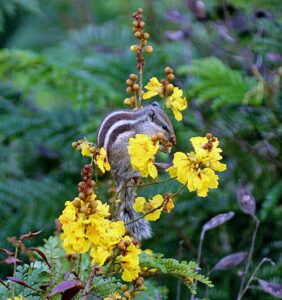
This tree supports birds bees and small wildlife. The flowers attract pollinators. The wide canopy cools the surroundings.
CARBON ROLE
The copper pod tree absorbs significant carbon as it grows fast. Planting more of these helps reduce urban heat stress.
INTERESTING FACTS
- The copper color of new leaves appears mostly in the warm months.
- The tree can live for more than 50 years in suitable climates.
- Its seed pods turn dark brown and remain on the tree long after drying.
- The yellow petals fall like a golden carpet during peak flowering.
- It is one of the fastest growing ornamental trees used in Indian cities.
FAQS
1. How long does a copper pod tree take to reach full height?
It grows very fast during the first few years and reaches a medium height in a short time. Most trees reach their full height in about eight to ten years depending on soil water and sunlight.
With steady care we can expect a healthy canopy sooner in warm areas.
2. Can we grow a copper pod tree in a small home garden?
It grows into a big tree so it suits spacious gardens more than tiny yards. Still people often grow it at boundaries or corners where there is enough room for the canopy.
3. Does the copper pod tree need fertilizers regularly?
It does not demand heavy feeding but it responds very well to natural compost. Adding compost twice a year keeps the soil active and helps the tree bloom better. Over fertilizing offers no benefit so gentle feeding works best for long term growth.
4. Why do the leaves sometimes turn pale or yellowish?
Leaves turn pale when the soil lacks nutrients or when the tree receives less sunlight. Waterlogging also stresses the roots and affects leaf color.
Improving drainage giving more sunlight and adding mild organic manure usually brings the leaves back to healthy green.
5. How do we protect young saplings during very hot summers?
Young saplings need steady moisture shade net protection and light mulching during extreme heat. Watering in the early morning keeps the roots cool.
Once the tree establishes itself it becomes very tolerant of heat and continues growing without much trouble.
CONCLUSION
The copper pod tree is one of those dependable trees that bring life color and comfort to any space. We get bright flowers shady afternoons and a tree that asks for very little in return.
If we want a fast growing companion for our garden this tree is a solid choice. We hope this guide helps you understand its nature and inspires you to plant one soon.
Thanks for reading. Keep growing keep exploring and don’t forget to return here at gardeningbud.com for more plants tips and gardening wisdom.